
Every year, the island of Bali prepares to celebrate one of its most sacred traditions known as Nyepi. The celebration marks the Balinese Hindu New Year based on the Saka calendar. Unlike most New Year celebrations around the world, Nyepi is observed in complete silence and reflection. The day represents a time for spiritual cleansing and self-evaluation for the Balinese Hindu community. Preparations for Nyepi usually begin several days before the actual day of silence. Communities across the island organize traditional ceremonies and purification rituals in temples and villages. One of the most anticipated traditions before Nyepi is the parade of large statues called Ogoh-Ogoh. These statues symbolize negative energies and evil spirits that must be cleansed before the new year begins. Villagers work together for weeks to build these artistic and often dramatic figures. The celebrations reflect the strong cultural identity and community spirit of the Balinese people.
The night before Nyepi, streets across Bali become lively with parades and cultural performances. Each village presents its own Ogoh-Ogoh statue, often designed with impressive detail and creativity. Local youth groups usually lead the construction and performance of these statues. The parade moves through village streets accompanied by traditional music and dance. Residents and visitors gather to watch the vibrant procession. The Ogoh-Ogoh are carried around the village in a symbolic act of driving away negative spirits. After the parade, many of these statues are burned in ceremonial rituals. This act symbolizes purification and the removal of negative energy. The ritual marks the transition from celebration to reflection. Soon after, the island prepares to enter complete silence.
When Nyepi begins, the entire island of Bali comes to a standstill. Airports close, roads remain empty, and businesses suspend their activities for 24 hours. The observance follows four main restrictions known as Catur Brata Penyepian. These principles include no fire or light, no work, no travel, and no entertainment. Residents remain in their homes and focus on meditation, prayer, and self-reflection. Visitors staying in hotels are also encouraged to respect these traditions. The normally lively island becomes one of the quietest places on Earth. Streets that are usually filled with vehicles become completely empty. Even the lights at night are minimized to maintain the atmosphere of silence. This unique experience is rarely found anywhere else in the world.
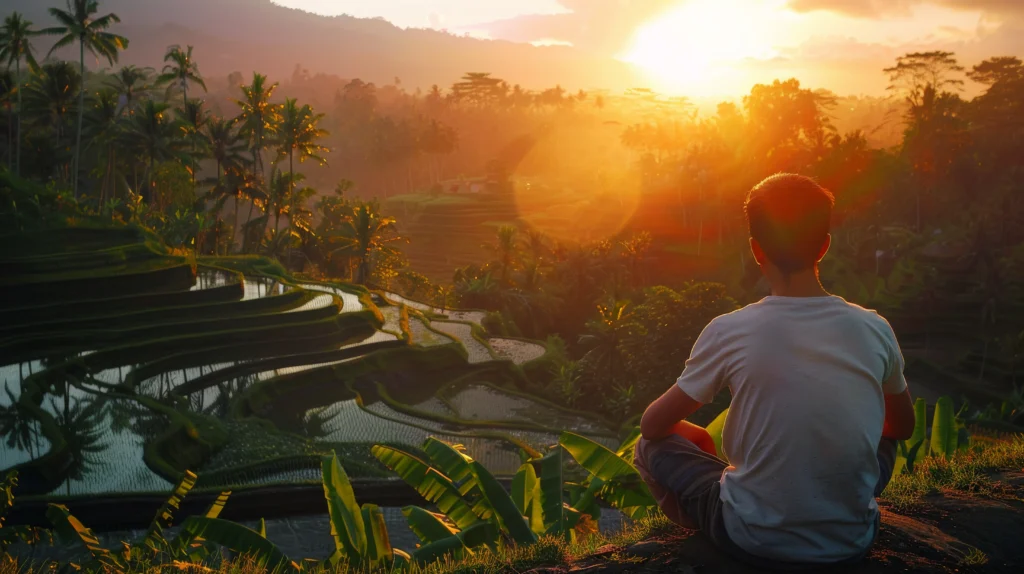
The peaceful environment during Nyepi creates a powerful moment of reflection. Without traffic, noise, or city lights, the island experiences a rare sense of calm. Many people use this time for meditation and spiritual contemplation. Families gather together at home to reflect on the past year and welcome the new one. Visitors who experience Nyepi often describe it as a profound cultural experience. The silence encourages people to disconnect from daily distractions. Nature also benefits from the pause in human activity. Air pollution temporarily decreases and the night sky becomes clearer. Many residents take the opportunity to observe the stars in the dark sky. These moments highlight the harmony between humans and nature.
Nyepi is not only a religious celebration but also a symbol of balance and renewal in Balinese culture. The philosophy behind the day emphasizes harmony between humans, nature, and spiritual life. This concept is deeply rooted in Balinese Hindu traditions. For centuries, the people of Bali have preserved these customs as part of their cultural heritage. The celebration also attracts international interest from travelers and researchers. Many visitors come to Bali specifically to experience Nyepi. However, tourists are expected to respect the rules during the day of silence. Local authorities and community leaders work together to ensure the traditions are followed. The observance reflects the strong cultural values of the Balinese community. Nyepi remains one of the most unique and meaningful cultural events in the world.